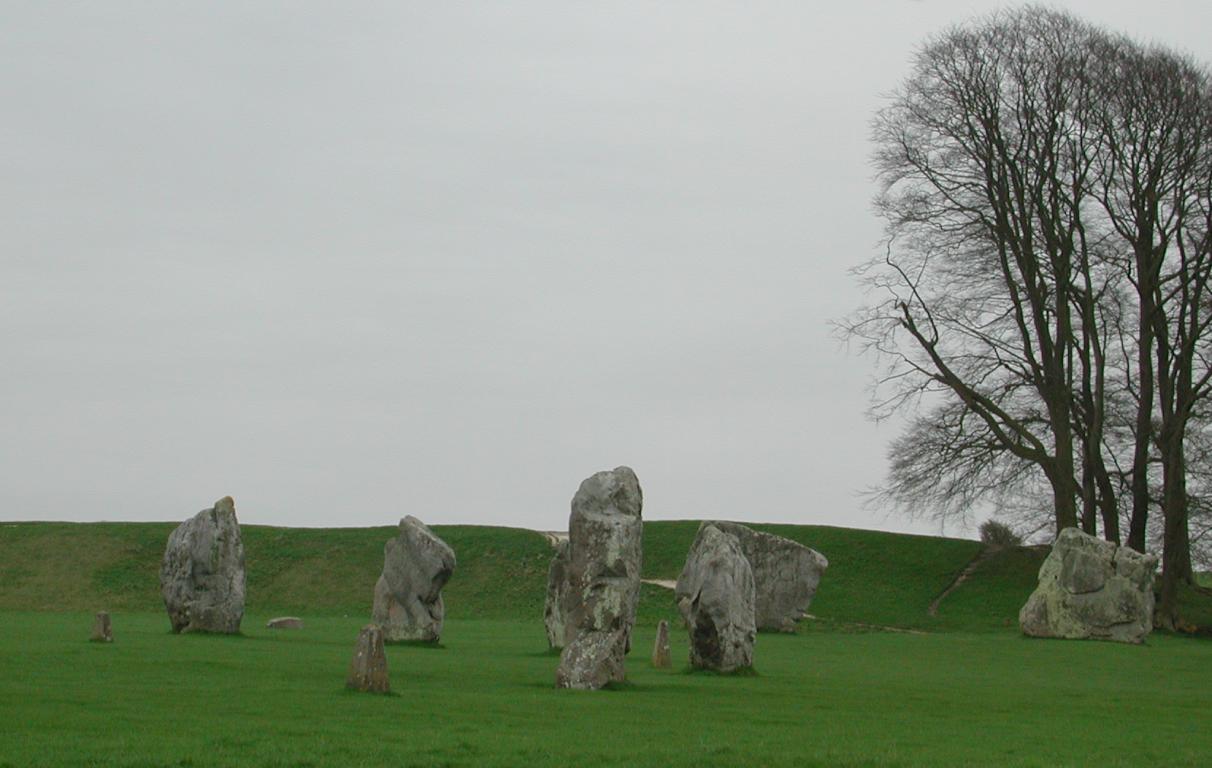
 On the drive from home we stopped at few Neolithic sites on Salisbury
Plain. Most were closed due to Foot and Mouth disease, but that meant there
were no tourists wandering amongst the stones at Avebury.
On the drive from home we stopped at few Neolithic sites on Salisbury
Plain. Most were closed due to Foot and Mouth disease, but that meant there
were no tourists wandering amongst the stones at Avebury.
| Trip to Bath/Bristol during Easter 2001 |
On the drive from home we stopped at few Neolithic sites on Salisbury
Plain. Most were closed due to Foot and Mouth disease, but that meant there
were no tourists wandering amongst the stones at Avebury.
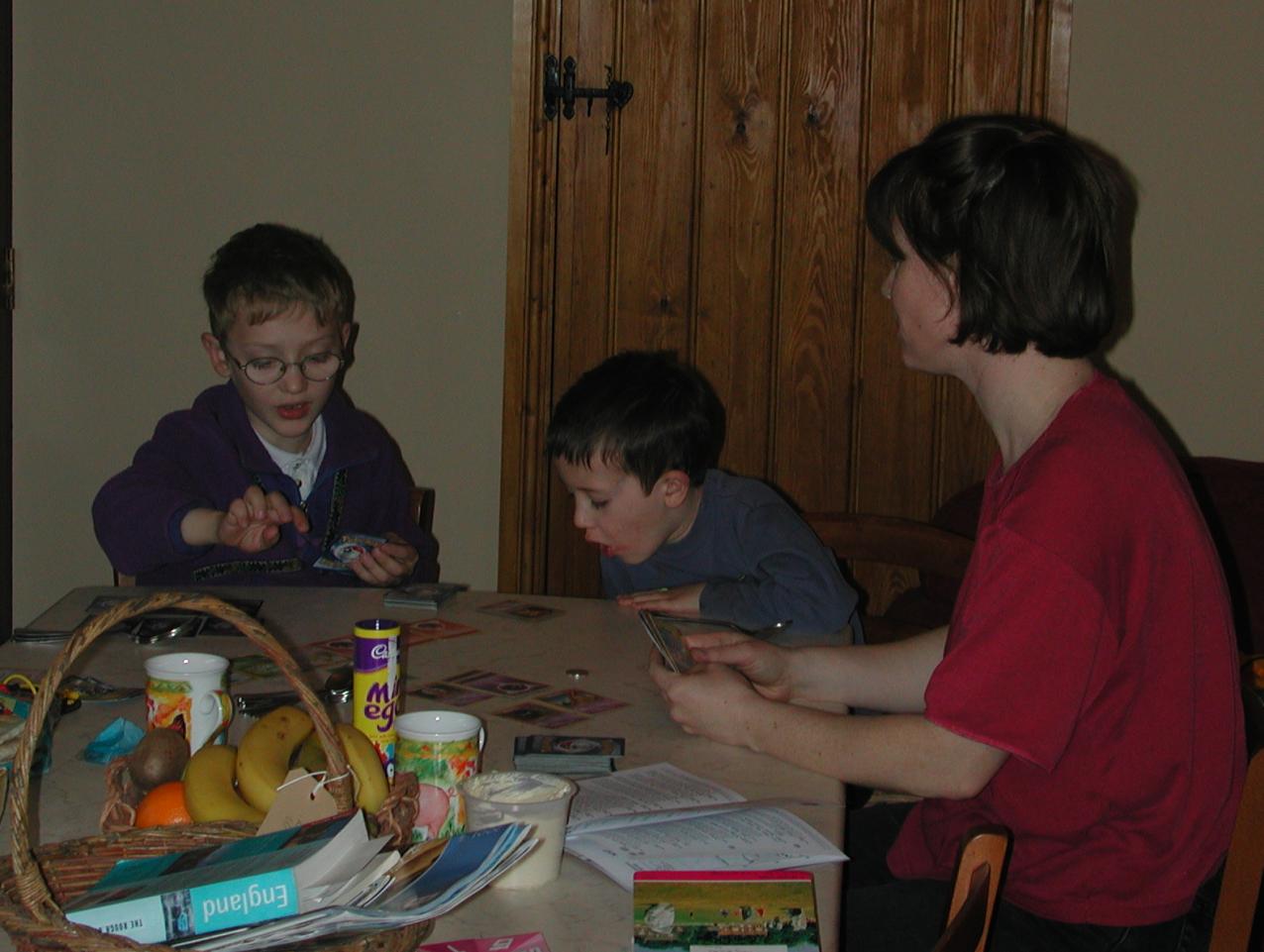 We stayed for a week in a self-catering cottage at "The Beeches",
a former chicken farm converted into a B&B establishment and hobby
farm. Eric and Danielle are playing an intense game of Pokemon cards,
with Kevan admiring all of the powerful attacks.
We stayed for a week in a self-catering cottage at "The Beeches",
a former chicken farm converted into a B&B establishment and hobby
farm. Eric and Danielle are playing an intense game of Pokemon cards,
with Kevan admiring all of the powerful attacks.
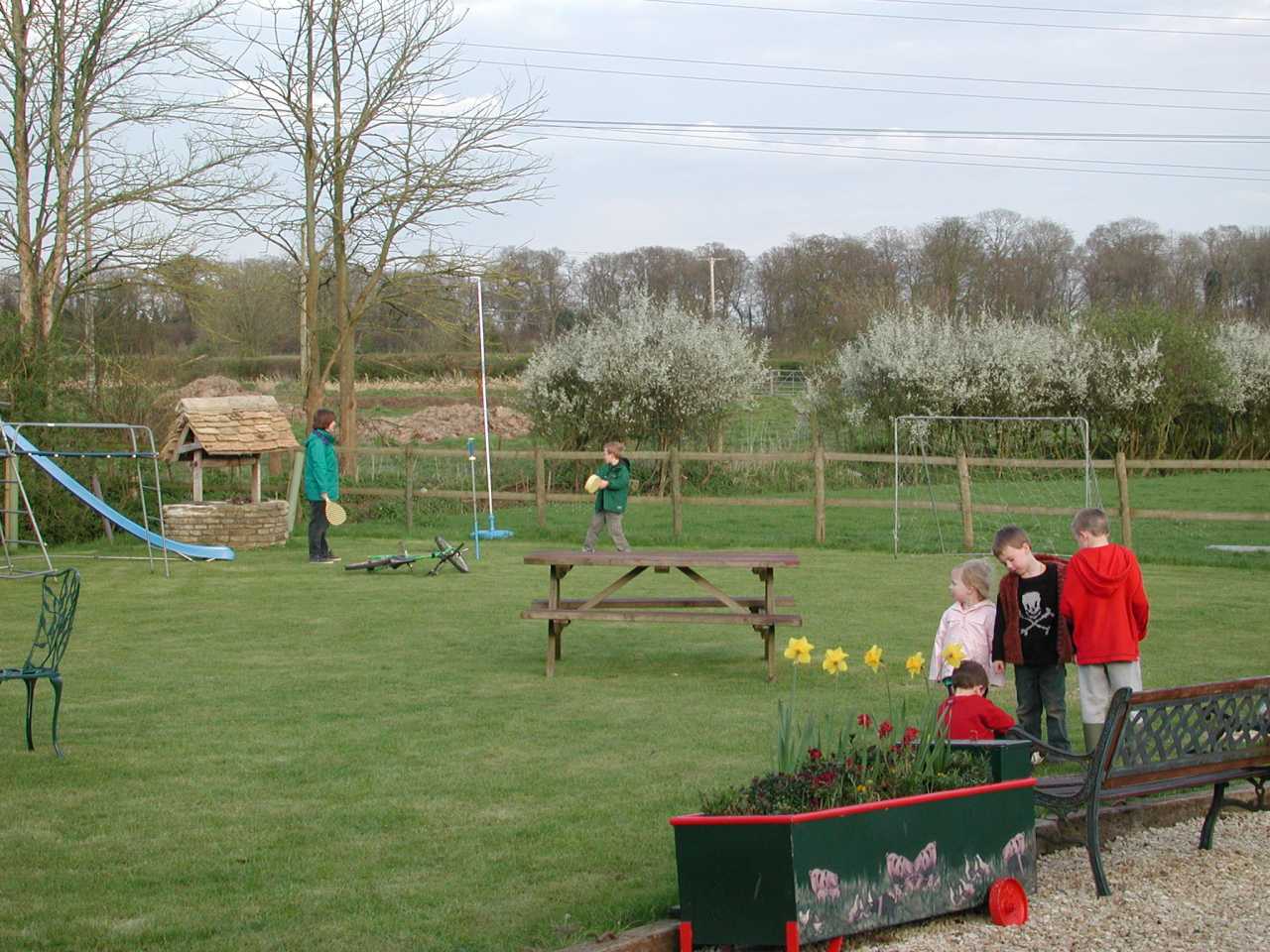 The attached cottage was occupied by a family who live in Cornwall. There
were two boys the age of ours, plus a 2.5 year old and a 9 month
old. The owners also have two kids. Many of these kids tended to run
around outside in the afternoons and evenings: riding bikes, climbing
in the tree-house, etc. Kevan is setting up his stomp-rocket: you
stomp on an air bladder and the the foam rocket fitted on a hollow tube
shoots up: 4-5 meters for a really solid stomp, but sometimes it fizzles.
The attached cottage was occupied by a family who live in Cornwall. There
were two boys the age of ours, plus a 2.5 year old and a 9 month
old. The owners also have two kids. Many of these kids tended to run
around outside in the afternoons and evenings: riding bikes, climbing
in the tree-house, etc. Kevan is setting up his stomp-rocket: you
stomp on an air bladder and the the foam rocket fitted on a hollow tube
shoots up: 4-5 meters for a really solid stomp, but sometimes it fizzles.
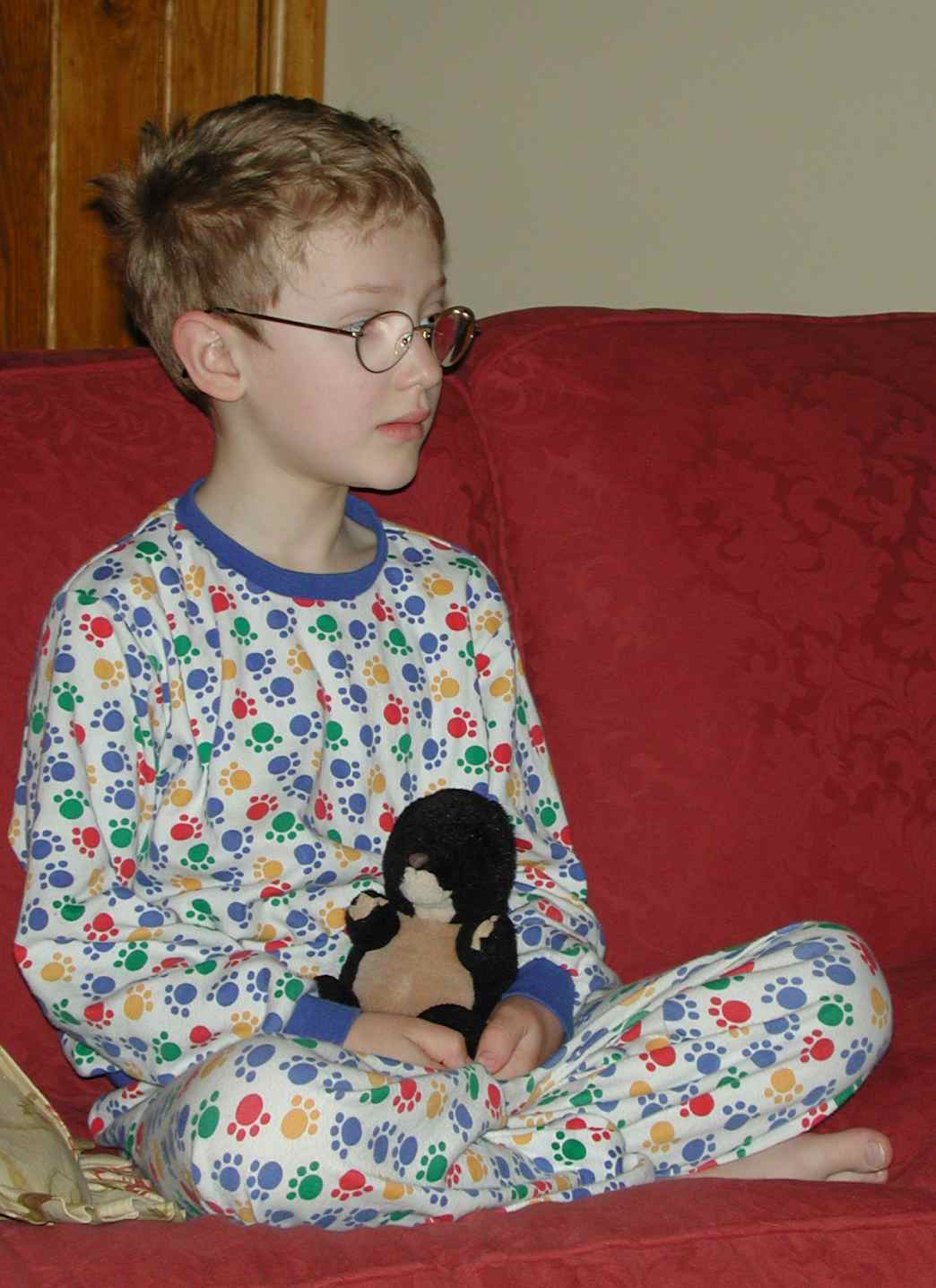 When not busy visiting historic sites or running around outside, we
would also watch TV. Here Eric and Mole are watching something entrancing.
When not busy visiting historic sites or running around outside, we
would also watch TV. Here Eric and Mole are watching something entrancing.
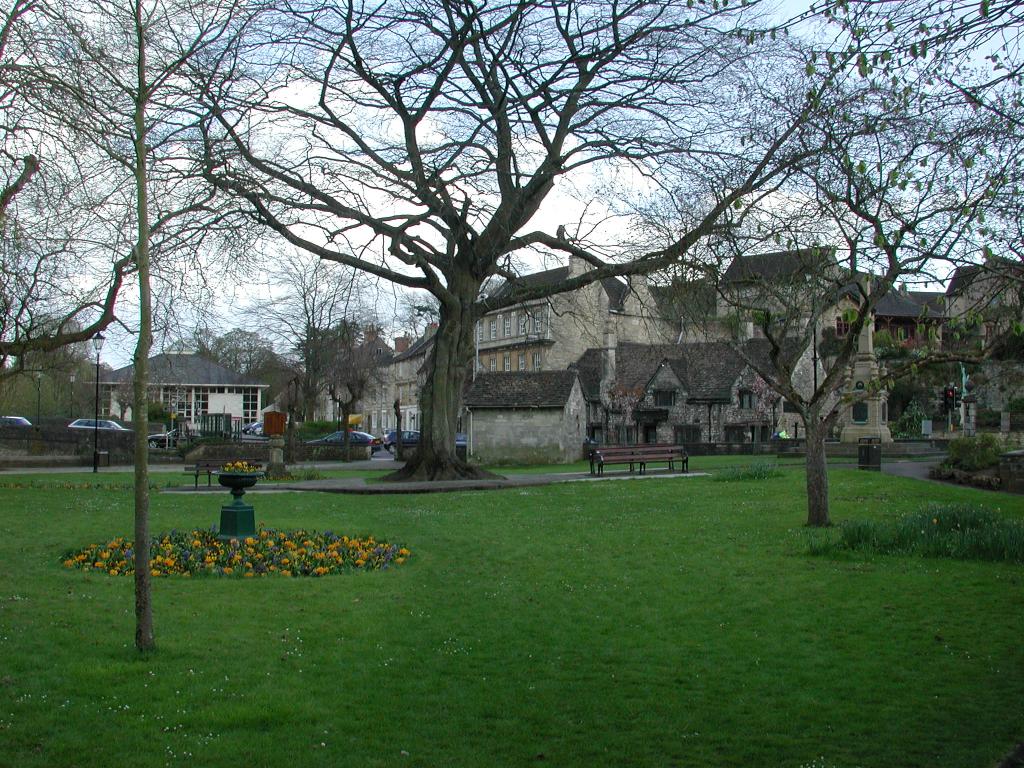 The Beeches is only a mile away from Bradford on Avon, a lovely town
rising up a steep hill to the North with the Avon flowing through
the town centre. There are pleasant walking paths along the river and the nearby
canal. Between the river and canal was a huge ancient tithe barn (not pictured).
The Beeches is only a mile away from Bradford on Avon, a lovely town
rising up a steep hill to the North with the Avon flowing through
the town centre. There are pleasant walking paths along the river and the nearby
canal. Between the river and canal was a huge ancient tithe barn (not pictured).
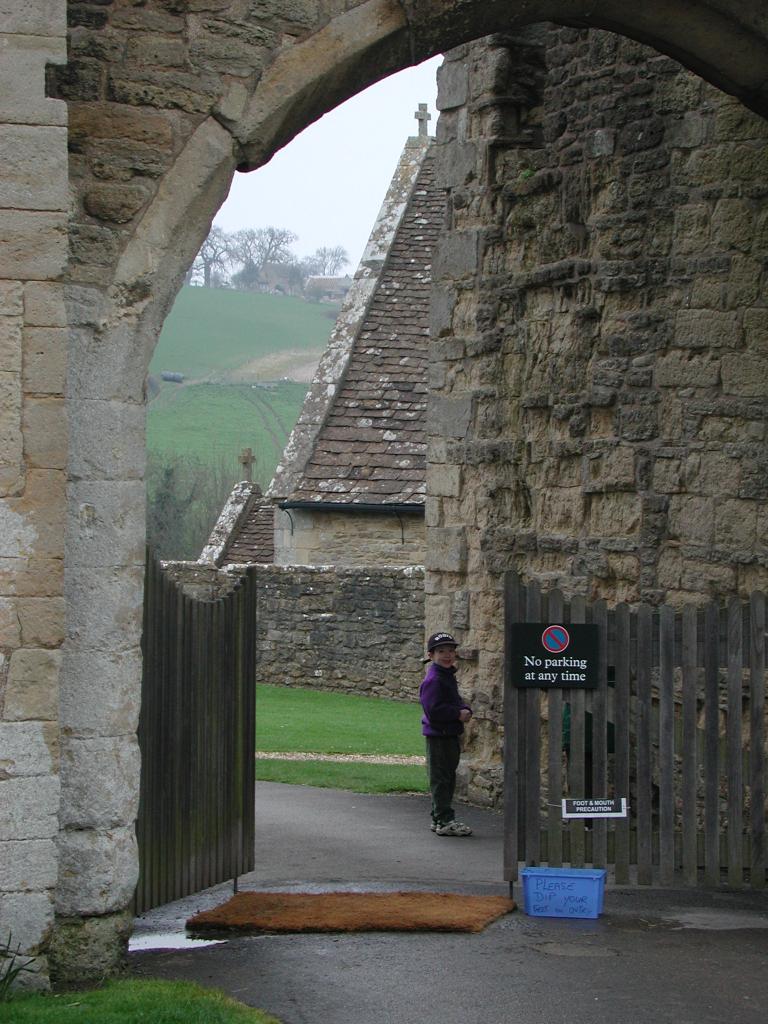 Saturday we visited Farley-Hungerford Castle. Note the mat soaked in
disenfectant that visitors must cross on the threshold, another sign
of the Foot and Mouth epidemic. Almost all footpaths in the countryside
were closed as a result. A few had recently reopened, including a
stretch of the Kennet-Avon canal towpath, which we were on a number of
times during the week.
Saturday we visited Farley-Hungerford Castle. Note the mat soaked in
disenfectant that visitors must cross on the threshold, another sign
of the Foot and Mouth epidemic. Almost all footpaths in the countryside
were closed as a result. A few had recently reopened, including a
stretch of the Kennet-Avon canal towpath, which we were on a number of
times during the week.
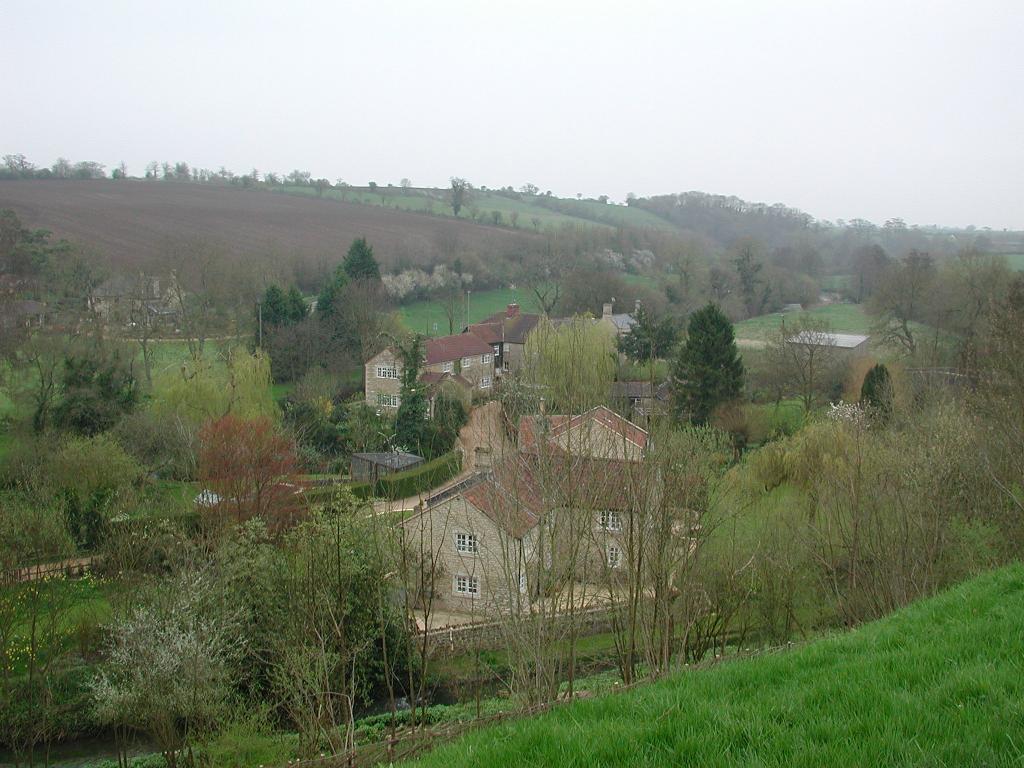 The view from the castle hill was lovely as green leaf buds and white
blossoms covered the trees. The countryside from here to Bath is quite
hilly, with rather flat ridge tops cut by deep valleys. The countryside
seems much more fertile than the barren Salisbury plain we crossed on
the drive from London.
The view from the castle hill was lovely as green leaf buds and white
blossoms covered the trees. The countryside from here to Bath is quite
hilly, with rather flat ridge tops cut by deep valleys. The countryside
seems much more fertile than the barren Salisbury plain we crossed on
the drive from London.
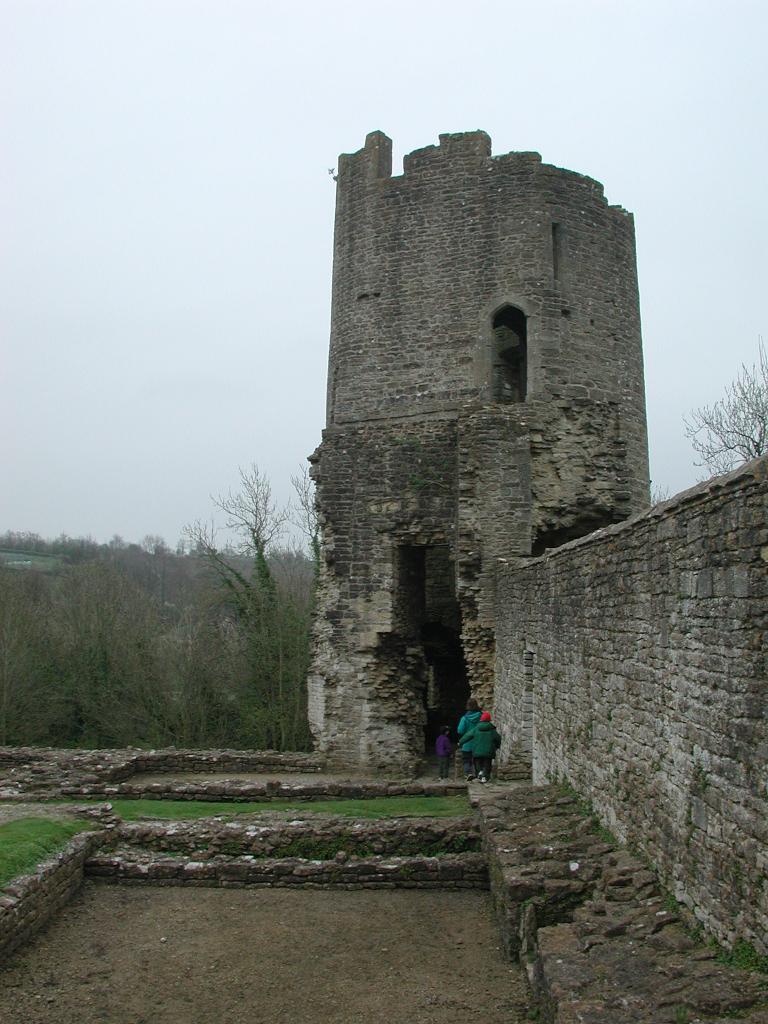
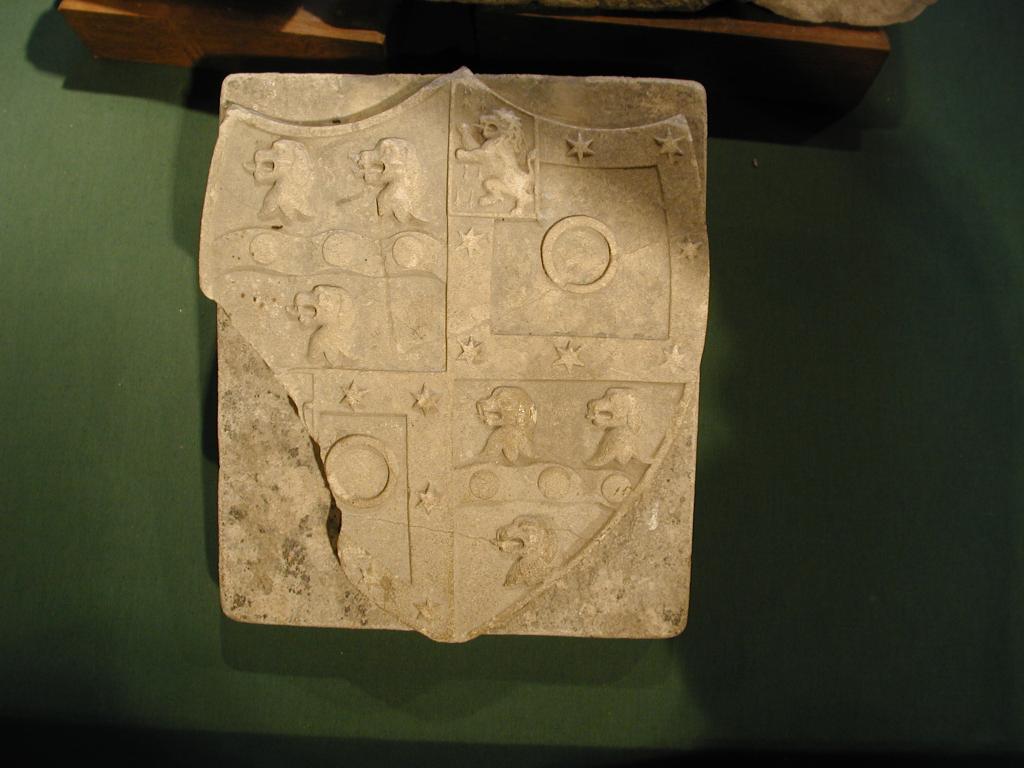
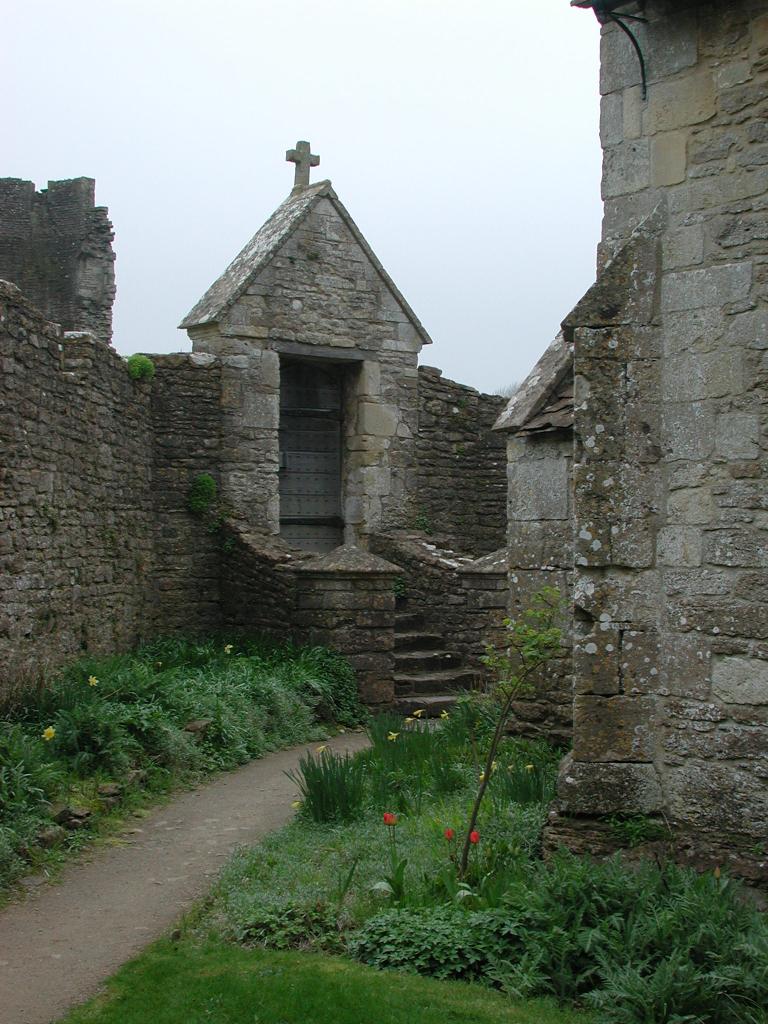
The chapel (with its garden shown on the right) was the best preserved
building. In the crypt under the west transept there were still lead coffins
of some noble ladies and their infants, who died about nine centuries ago. There
were only educated guesses as to who exactly was resting there.
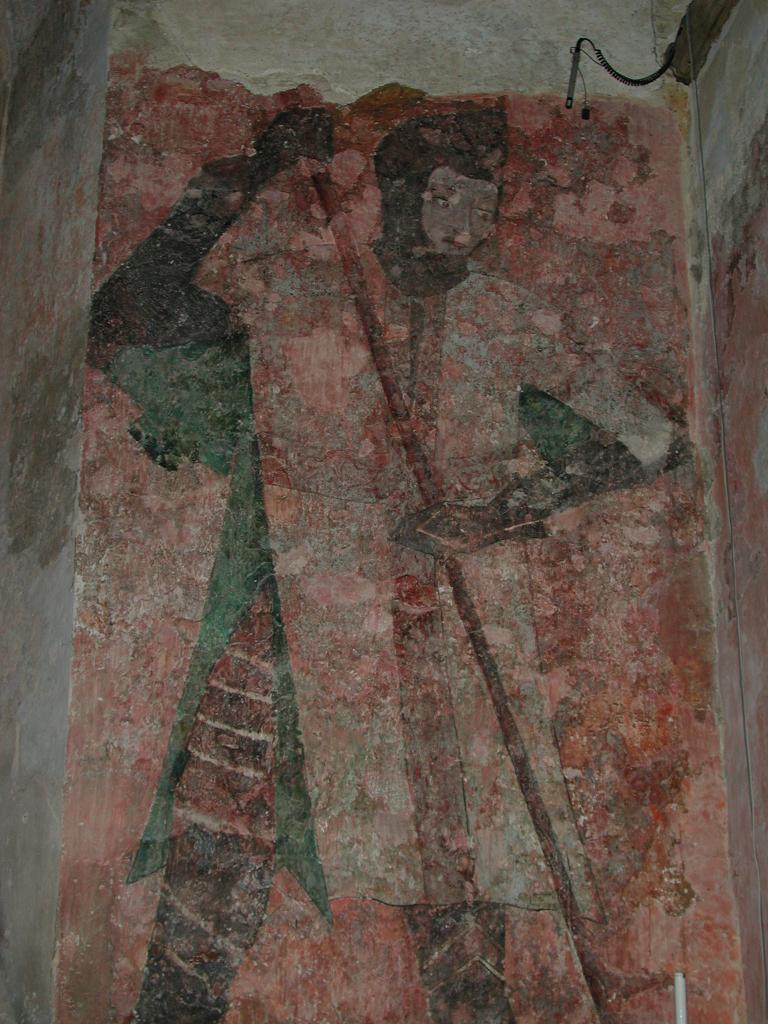 The chapel interior had once been colourfully painted. There is one fading
mural of St. George impaling some unfortunate dragon. The microphone on
the top right was fixed to the wall, apparently to listen for the sounds
of falling plaster. Not many examples of these murals survive.
The chapel interior had once been colourfully painted. There is one fading
mural of St. George impaling some unfortunate dragon. The microphone on
the top right was fixed to the wall, apparently to listen for the sounds
of falling plaster. Not many examples of these murals survive.
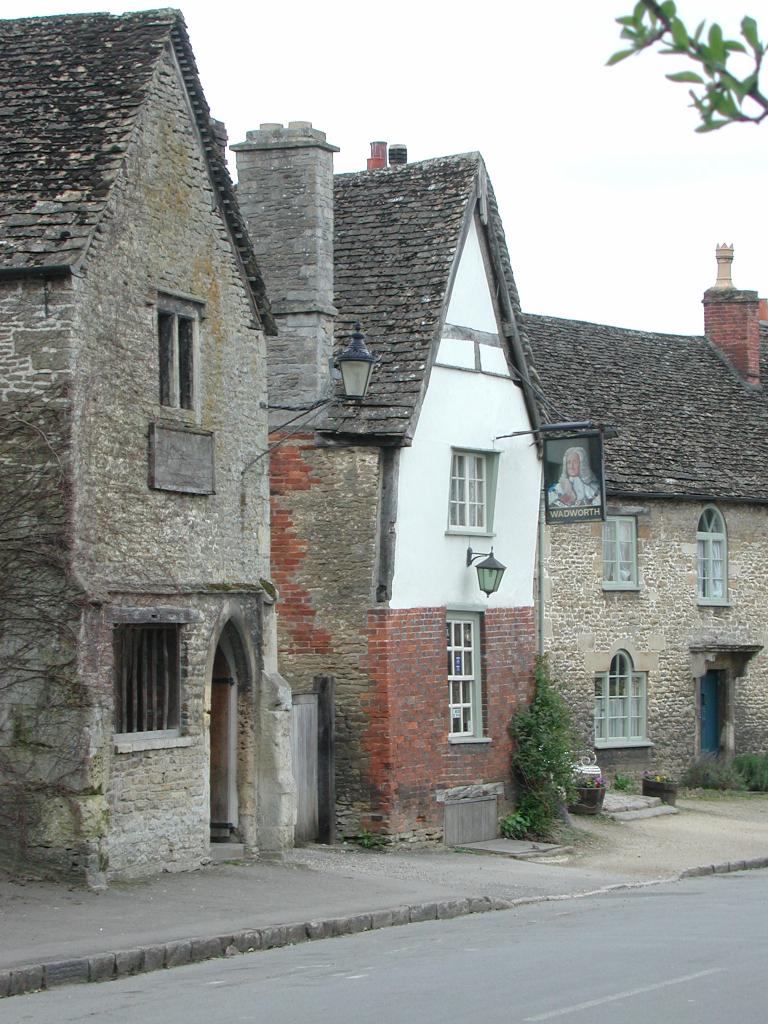 On our way for a day out at Bowood Estate, we stopped off in Lacock to
look around and buy a loaf of fresh baked bread.
On our way for a day out at Bowood Estate, we stopped off in Lacock to
look around and buy a loaf of fresh baked bread.
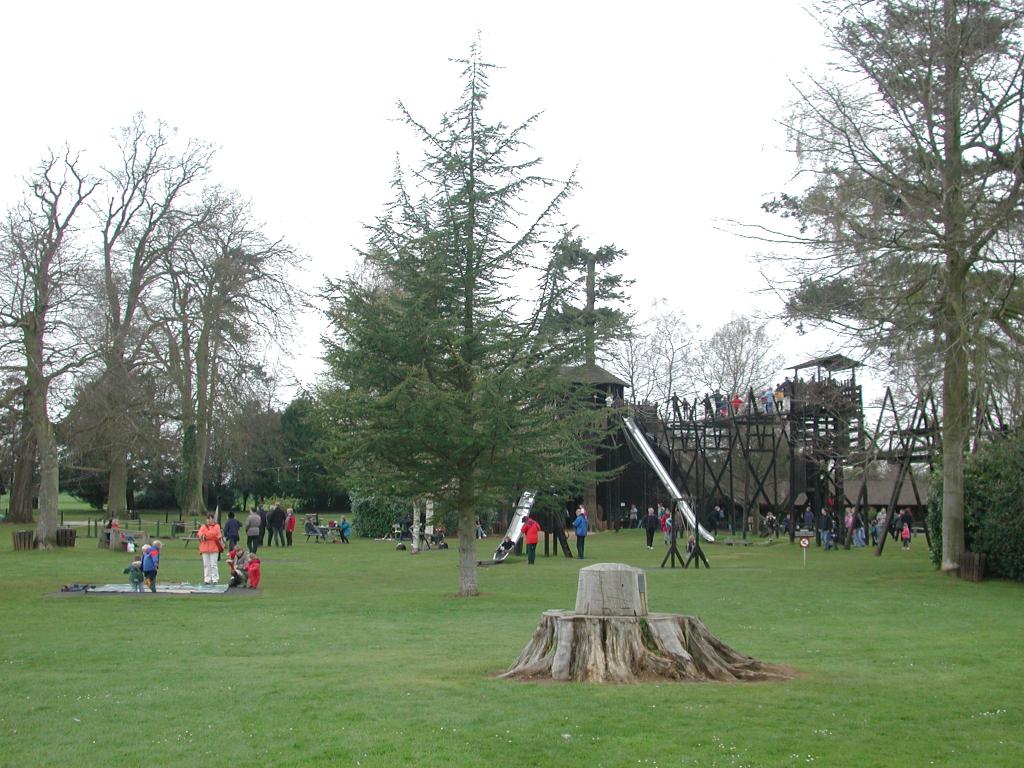
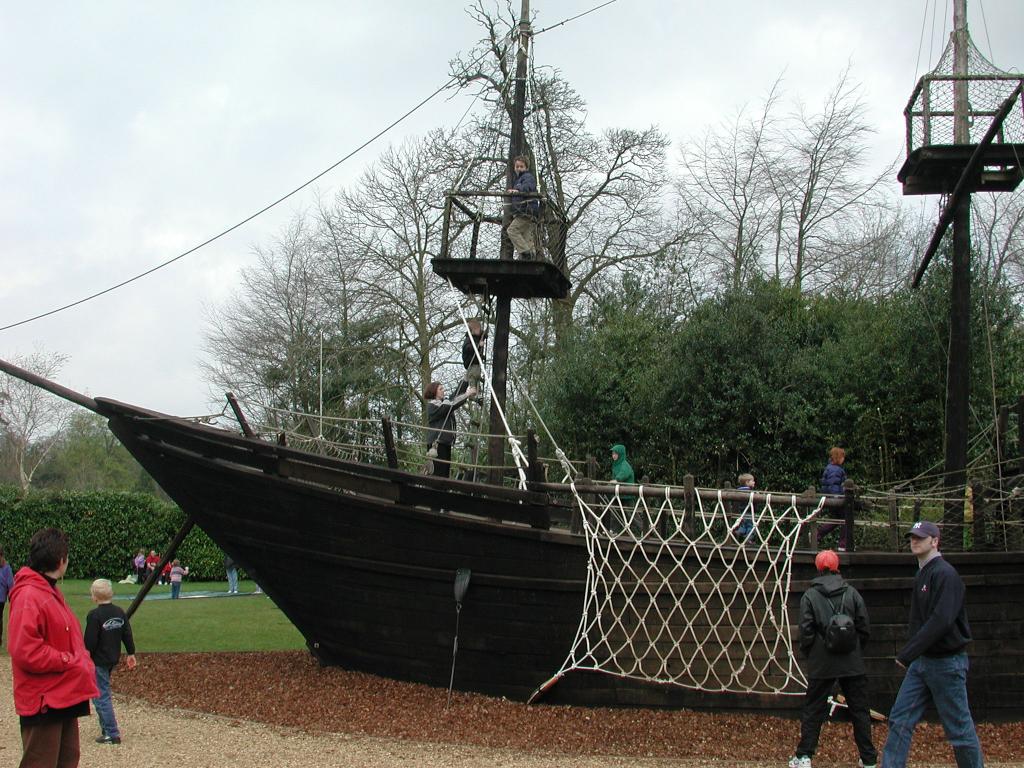 The main attraction of Bowood for us and many other families on this Easter
Monday was a big adventure playground. Harrr matey - shiver me timbers. Come
to think of it, the weather was quite cold; and that before the cloudburst.
The main attraction of Bowood for us and many other families on this Easter
Monday was a big adventure playground. Harrr matey - shiver me timbers. Come
to think of it, the weather was quite cold; and that before the cloudburst.
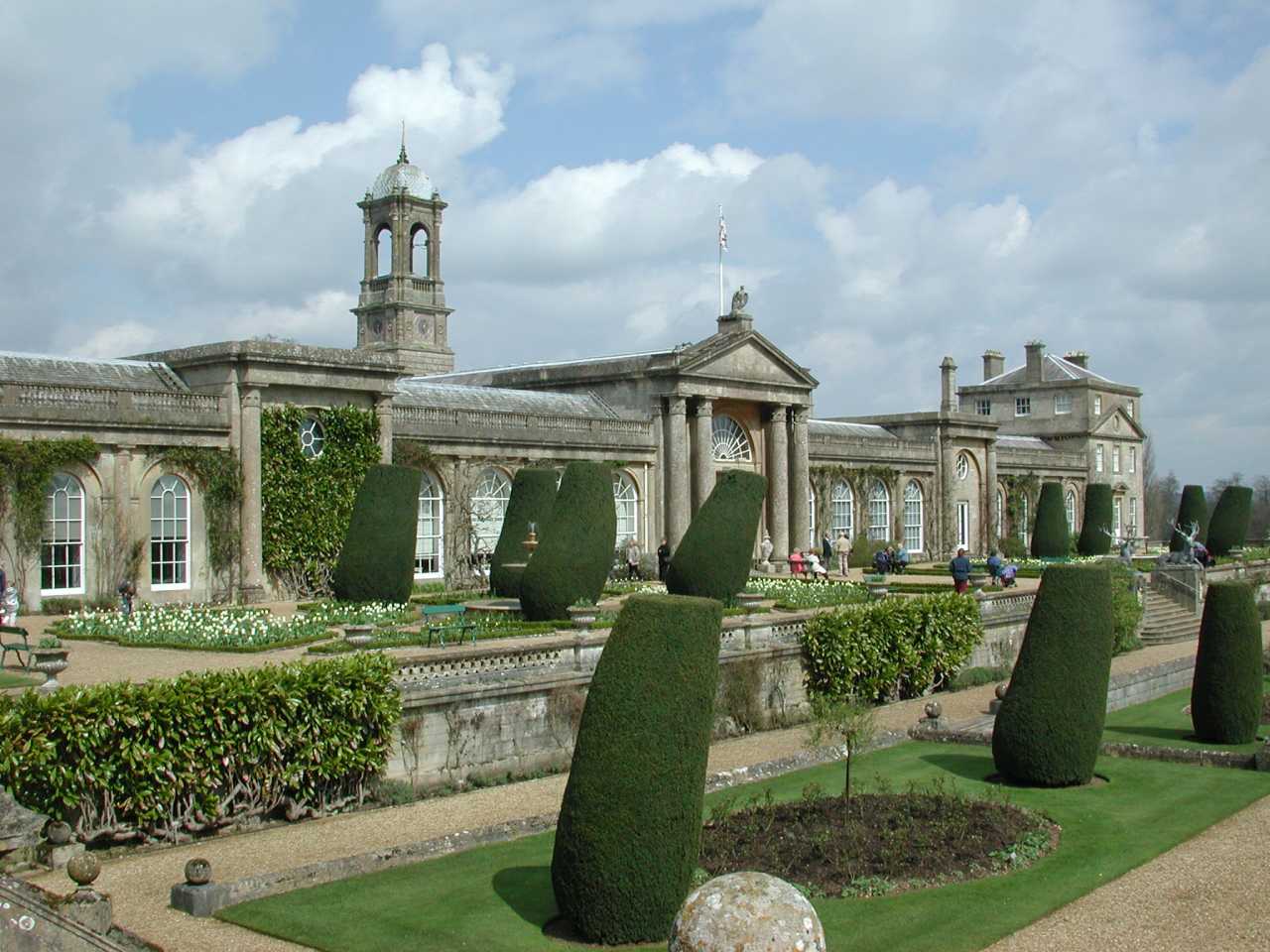
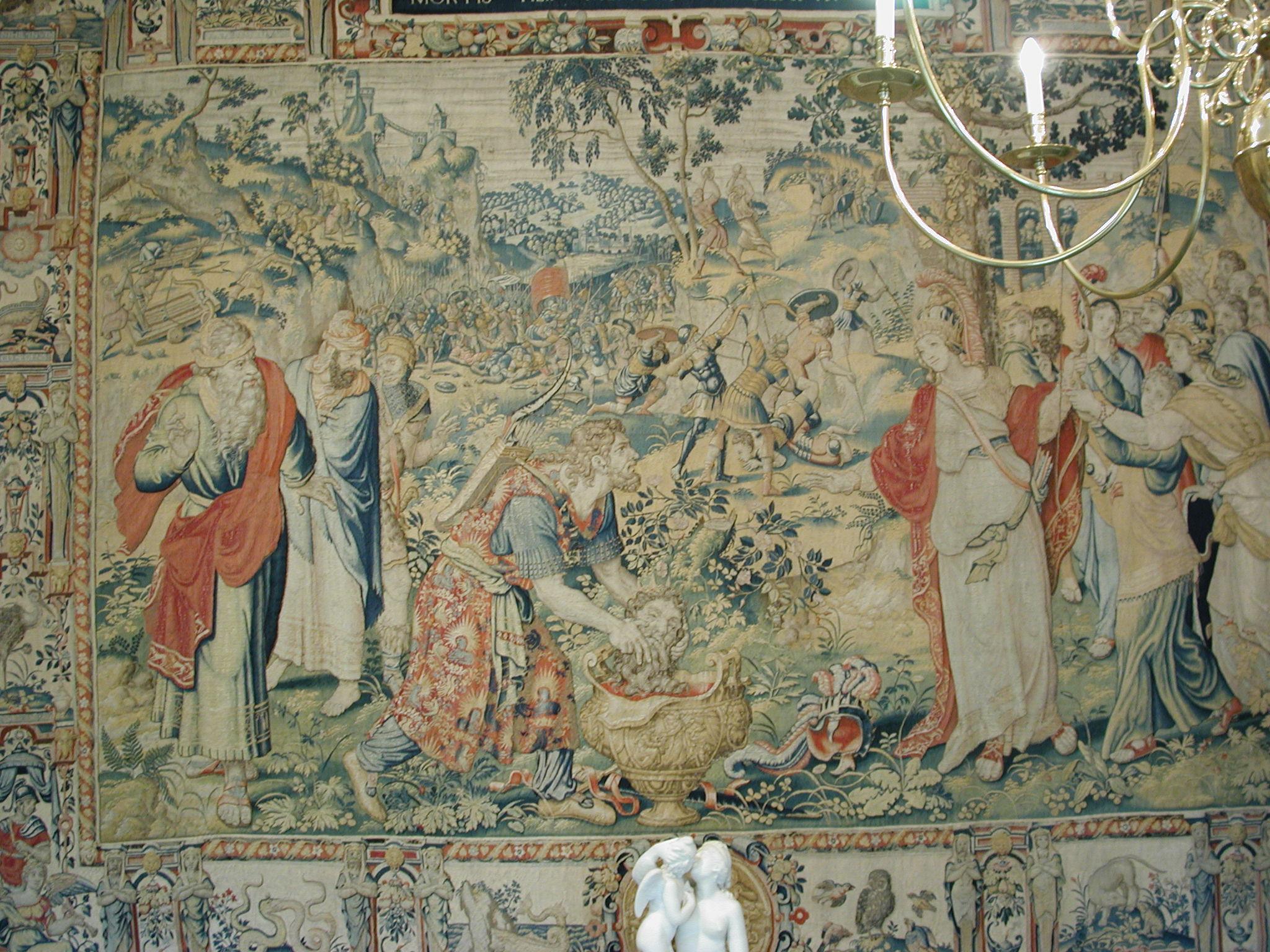 The secondary attraction of Bowood for the adults was the stately home of
the Earl and Countess of Shelburne, who had the foresight to turn their
estate into a historical theme park in order to afford the upkeep. The
parents took turns minding the kids while the other toured the house
(which had some interesting objets d'art). Some ancestor had been both
governor general of Canada (1883-8) and Viceroy of India (1888-94)
in order to make ends meet. He brought lots of fancy ivory and silver
trinkets back as presents from India. The Canadians must have been
cheapskates in comparison- no such gifts were on display... Then we all
had tea in the Tea Room.
The secondary attraction of Bowood for the adults was the stately home of
the Earl and Countess of Shelburne, who had the foresight to turn their
estate into a historical theme park in order to afford the upkeep. The
parents took turns minding the kids while the other toured the house
(which had some interesting objets d'art). Some ancestor had been both
governor general of Canada (1883-8) and Viceroy of India (1888-94)
in order to make ends meet. He brought lots of fancy ivory and silver
trinkets back as presents from India. The Canadians must have been
cheapskates in comparison- no such gifts were on display... Then we all
had tea in the Tea Room.
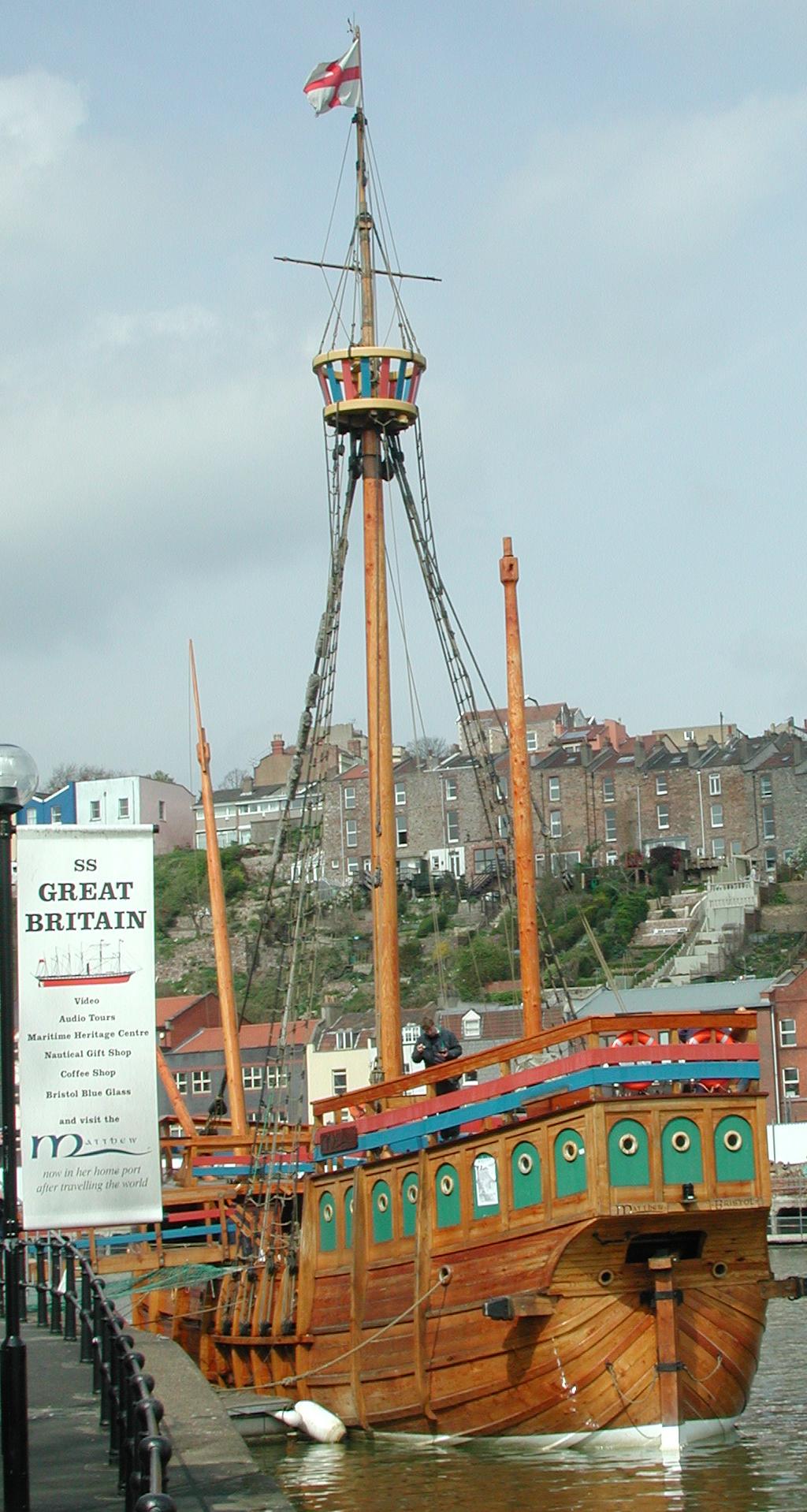
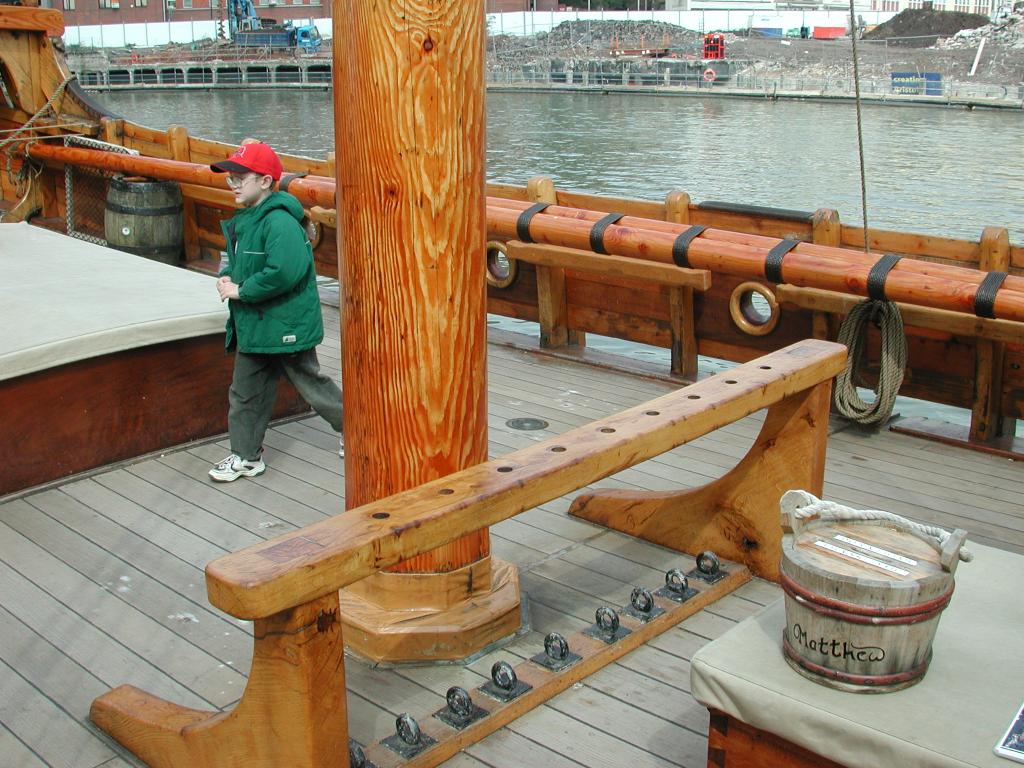 Another Canadian link was moored in Bristol. A reconstruction of John
Cabot's ship Matthew, in which he "discovered" Newfoundland (long after
the Beothuks, Norse, French and Portuguese). England got it to claim it in the
end, so the ruse worked. Not to detract from the sailors' courage:
this is a small ship to cross the Atlantic in. Cabot and his ship
disappeared without a trace on a subsequent voyage.
Another Canadian link was moored in Bristol. A reconstruction of John
Cabot's ship Matthew, in which he "discovered" Newfoundland (long after
the Beothuks, Norse, French and Portuguese). England got it to claim it in the
end, so the ruse worked. Not to detract from the sailors' courage:
this is a small ship to cross the Atlantic in. Cabot and his ship
disappeared without a trace on a subsequent voyage.
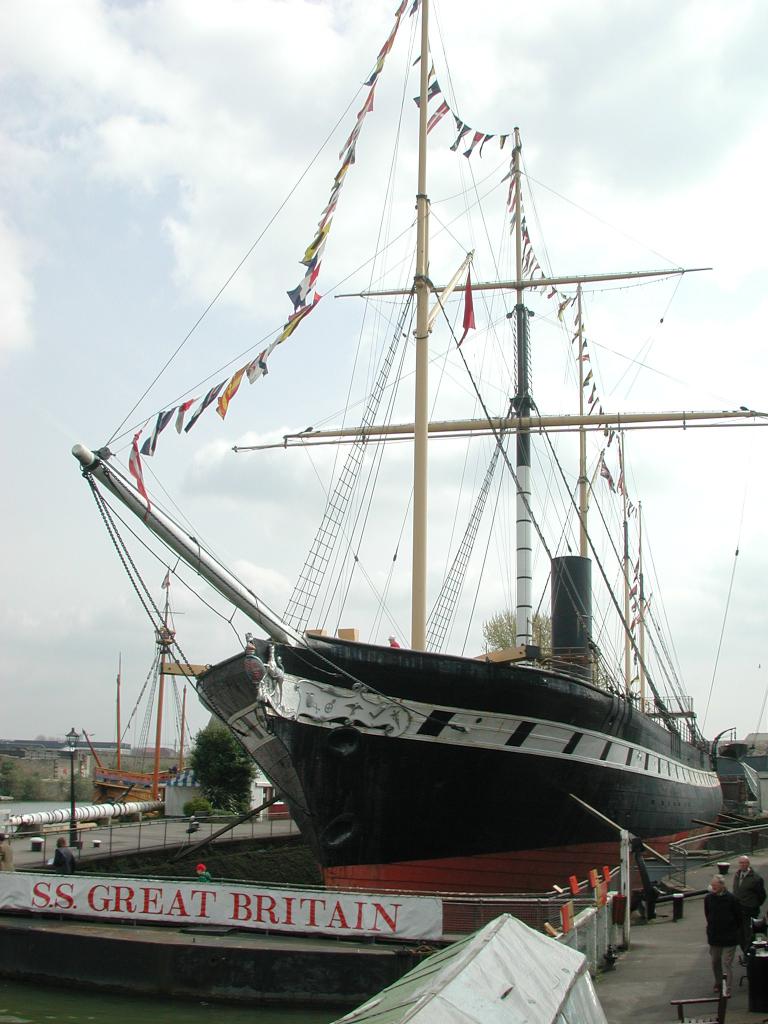
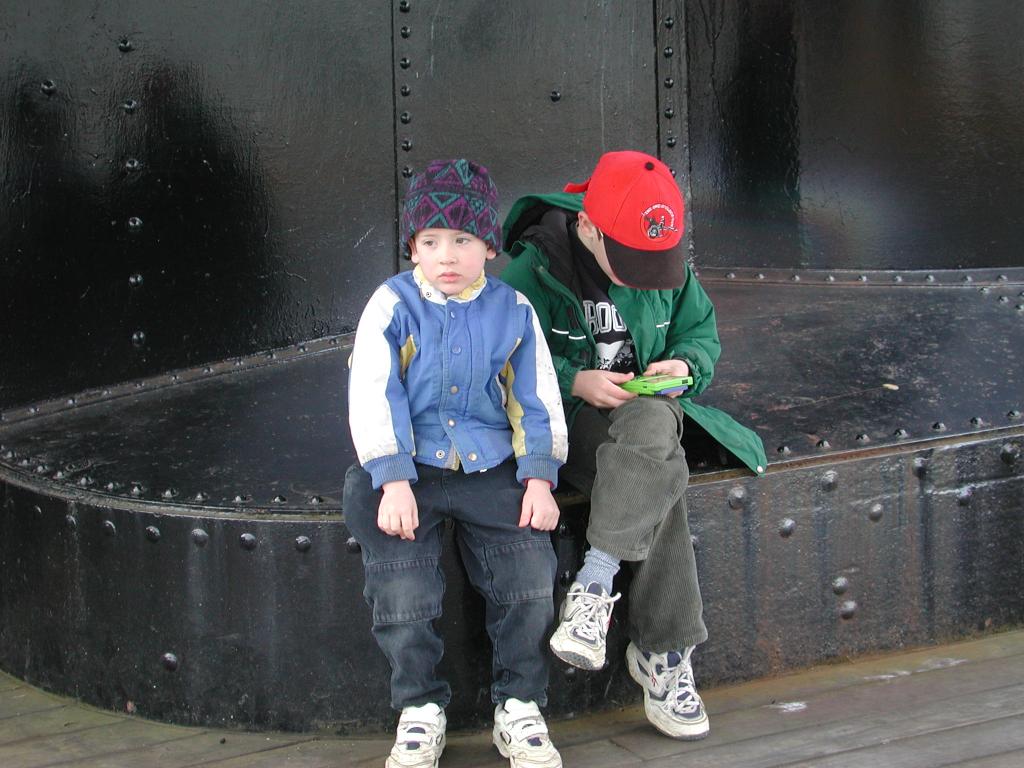 A much larger ship built three centuries later was in a drydock 100 meters away.
The SS Great Britain, built by engineering genius Isambard Kingdom Brunel.
Some of the amazing engineering innovations this guy introduced failed to impress
our kids though.
A much larger ship built three centuries later was in a drydock 100 meters away.
The SS Great Britain, built by engineering genius Isambard Kingdom Brunel.
Some of the amazing engineering innovations this guy introduced failed to impress
our kids though.
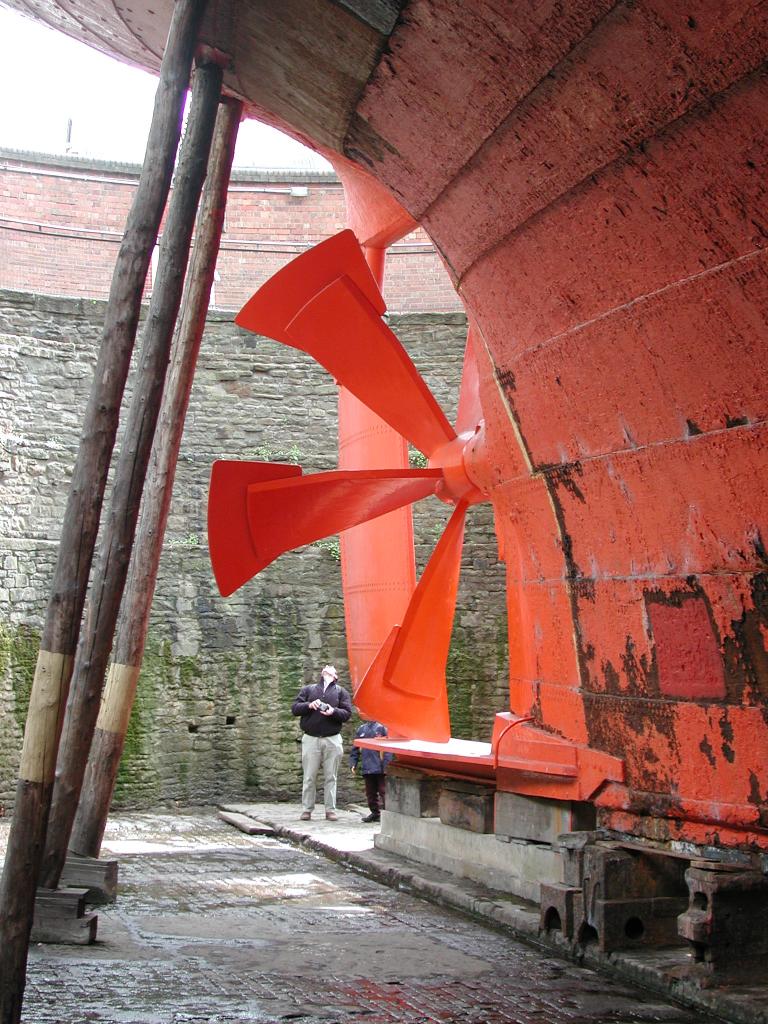
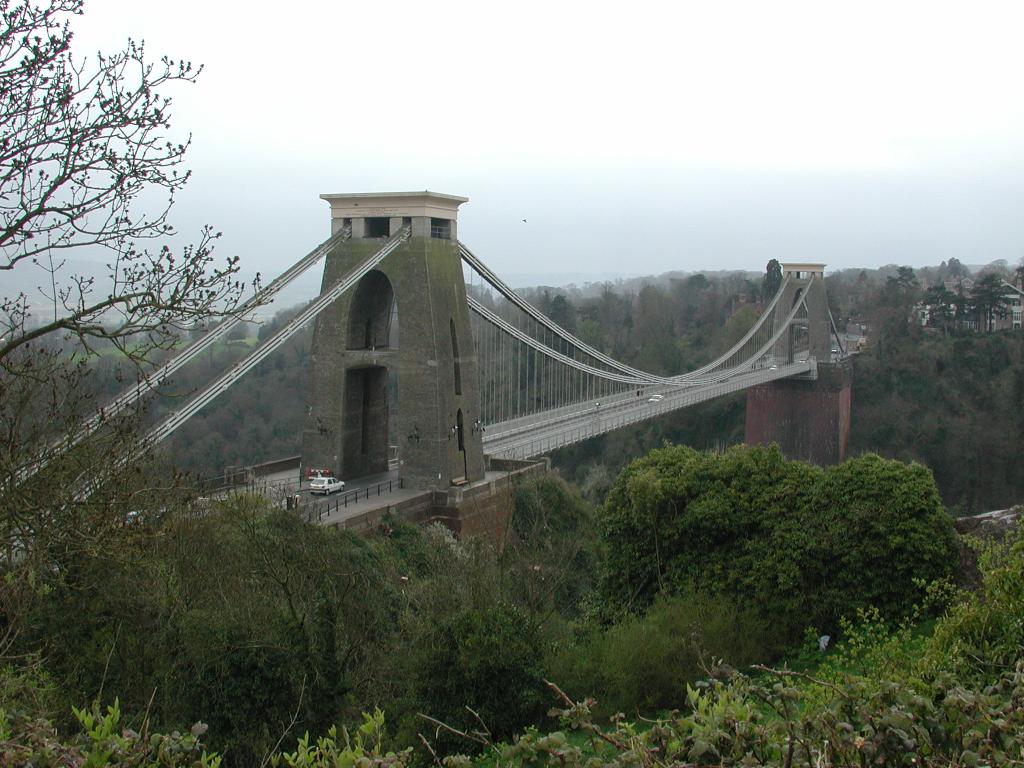 The great Isambard build the first stream powered luxury ocean liner
with the largest steam engine ever built, a screw propeller and iron
hull which was to be in service for 75 years. He also built the Great
Western railway, tunnels and the Clifton Suspension bridge, which was
completed after his death.
The great Isambard build the first stream powered luxury ocean liner
with the largest steam engine ever built, a screw propeller and iron
hull which was to be in service for 75 years. He also built the Great
Western railway, tunnels and the Clifton Suspension bridge, which was
completed after his death.
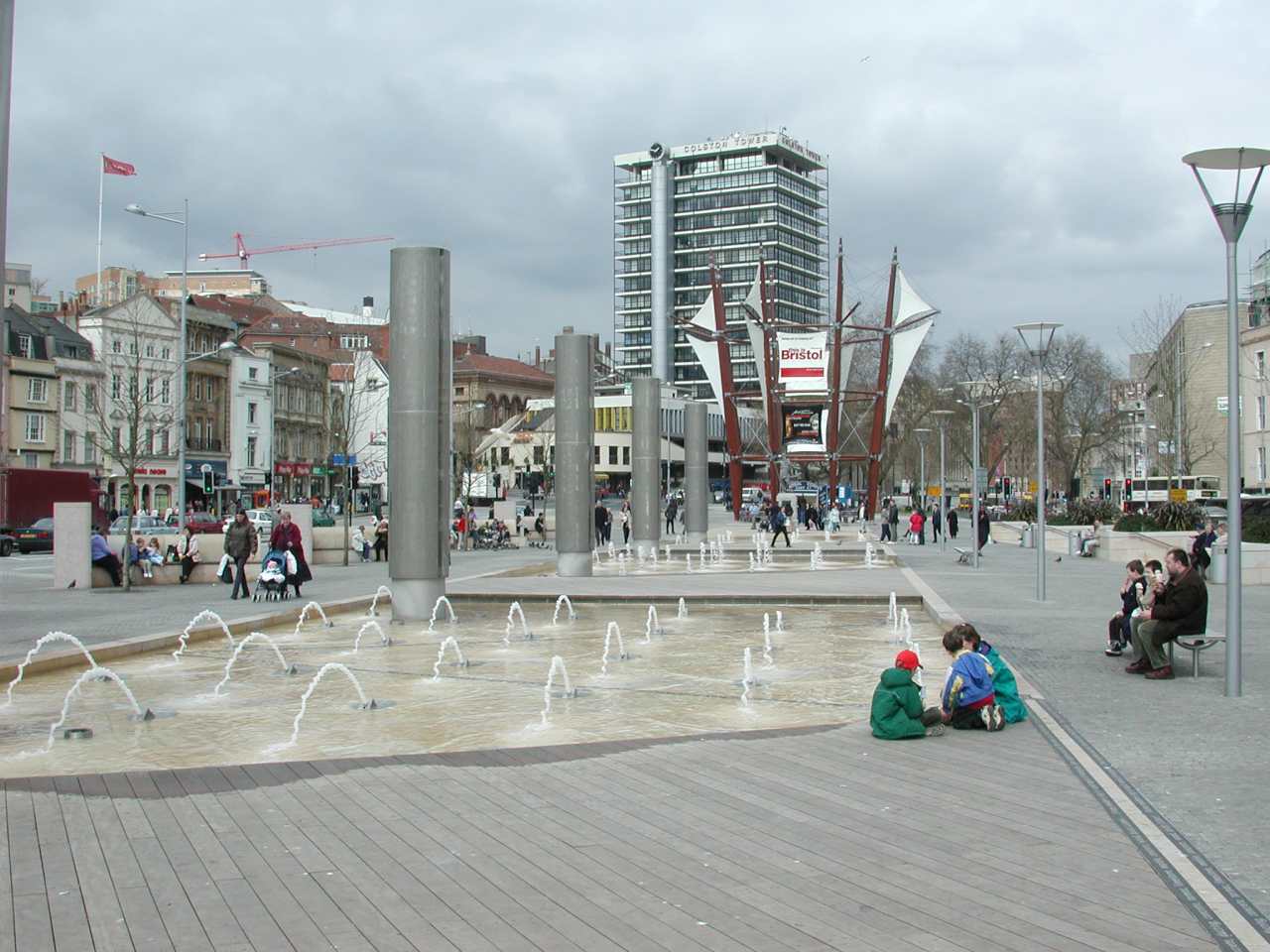
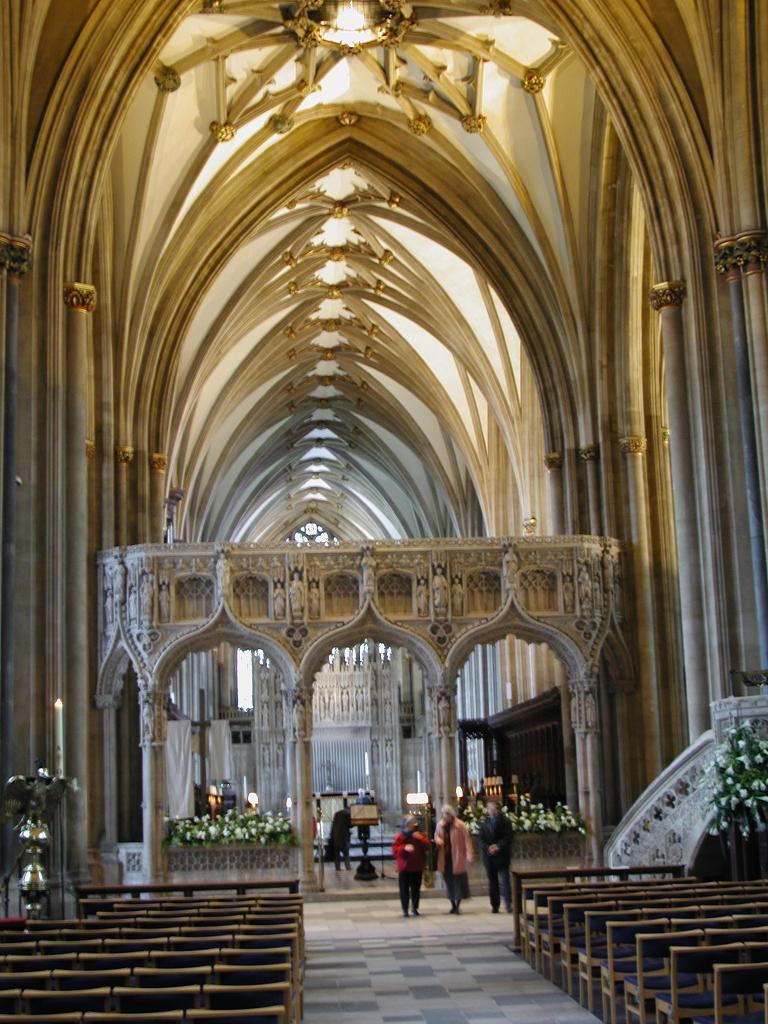 Bristol downtown features a plaza with fountains, many cafes and an
impressive cathedral up on the hill.
Bristol downtown features a plaza with fountains, many cafes and an
impressive cathedral up on the hill.
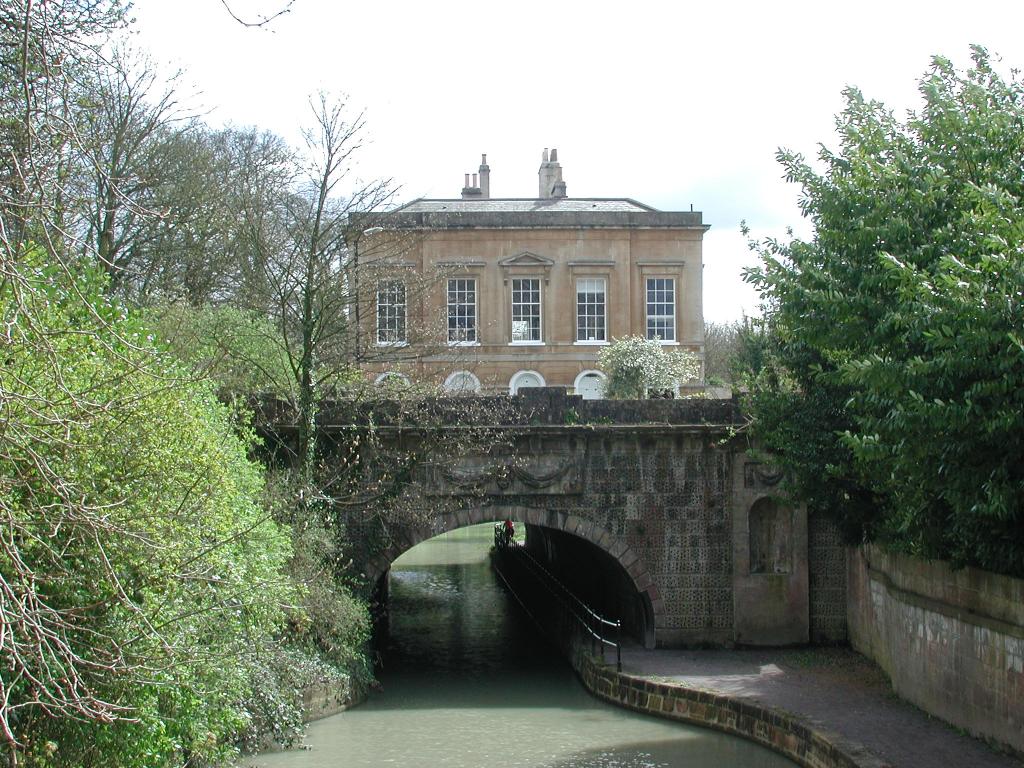
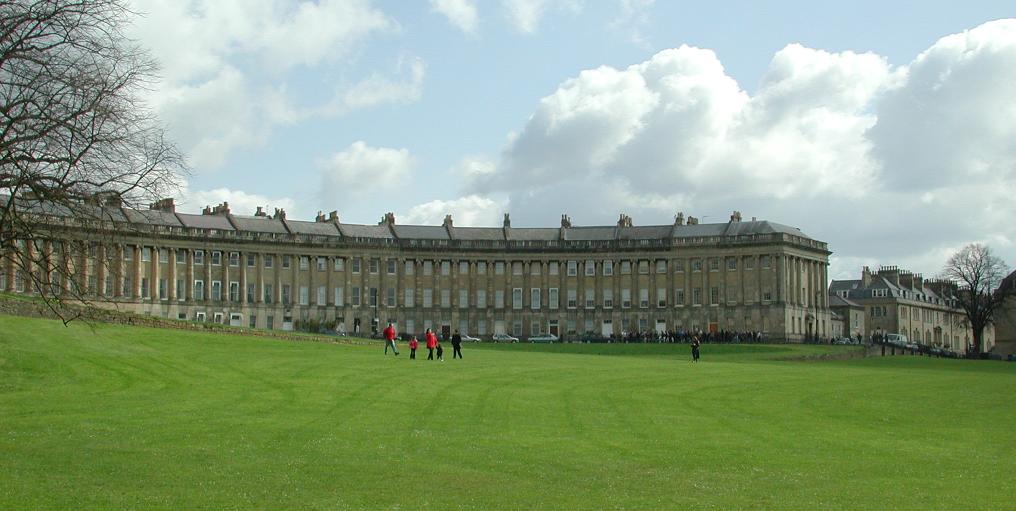 Bath stone is famous for its warm golden yellow colour and many Georgian buildings
show it off.
Bath stone is famous for its warm golden yellow colour and many Georgian buildings
show it off.
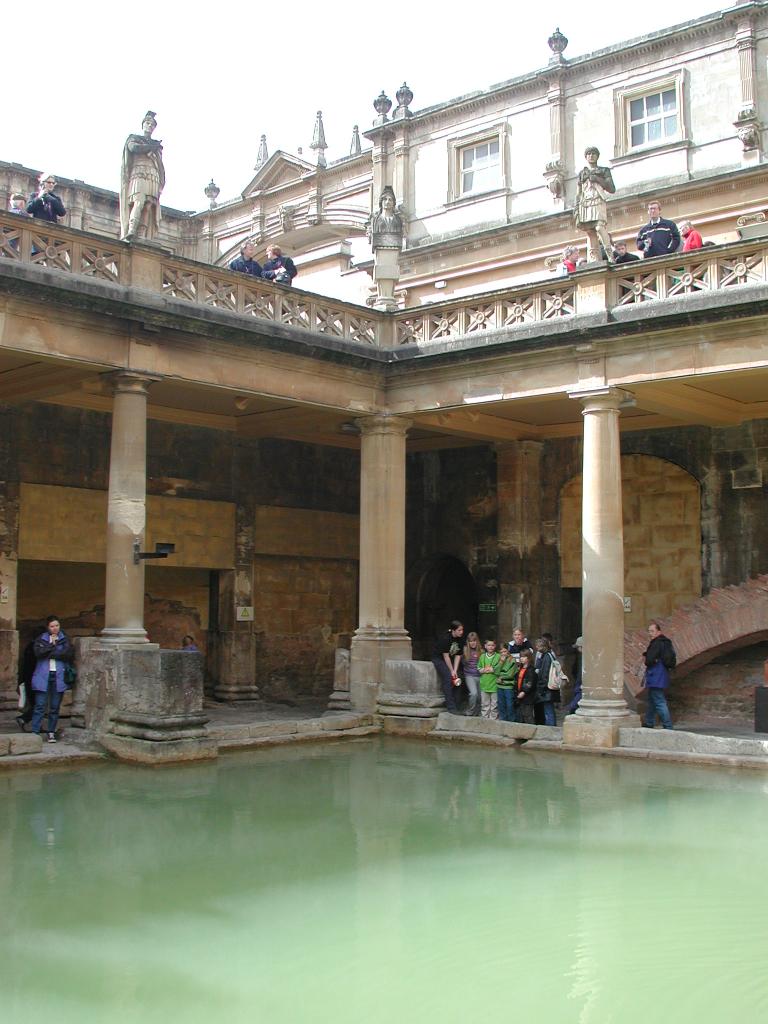
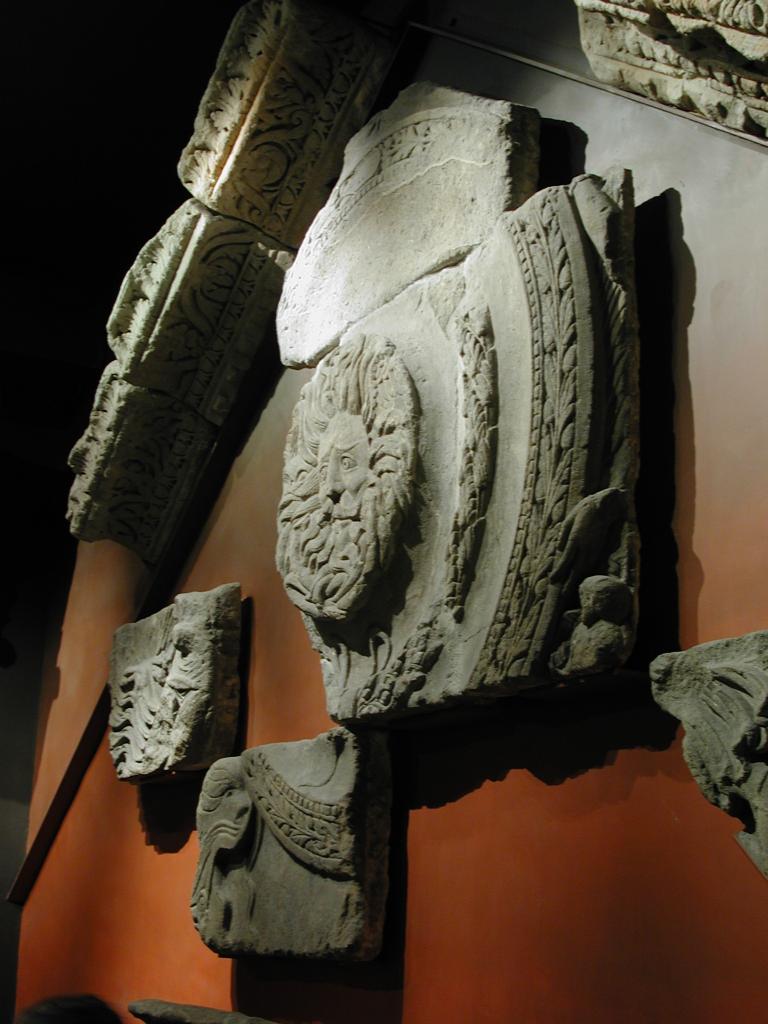 Under Bath is the source of a hot spring that still issues a substantial volume
of water at a constant 47 degrees C. Before the Romans arrived, the locals
enjoyed a good wallow in the mud and attributed the hot spring to
the Goddess Sulis. The Romans were suitably impressed, identified Sulis
as Minerva in another guise and built a temple and an adjoining massive
baths complex with hot, tepid and cold plunge pools, steam rooms, etc. The
ancient Roman complex was discovered and excavated in the mid-19th century
when local residents complained of seepage and water damage in their basements.
The resulting museum, largely underground, is well worth a visit.
Under Bath is the source of a hot spring that still issues a substantial volume
of water at a constant 47 degrees C. Before the Romans arrived, the locals
enjoyed a good wallow in the mud and attributed the hot spring to
the Goddess Sulis. The Romans were suitably impressed, identified Sulis
as Minerva in another guise and built a temple and an adjoining massive
baths complex with hot, tepid and cold plunge pools, steam rooms, etc. The
ancient Roman complex was discovered and excavated in the mid-19th century
when local residents complained of seepage and water damage in their basements.
The resulting museum, largely underground, is well worth a visit.
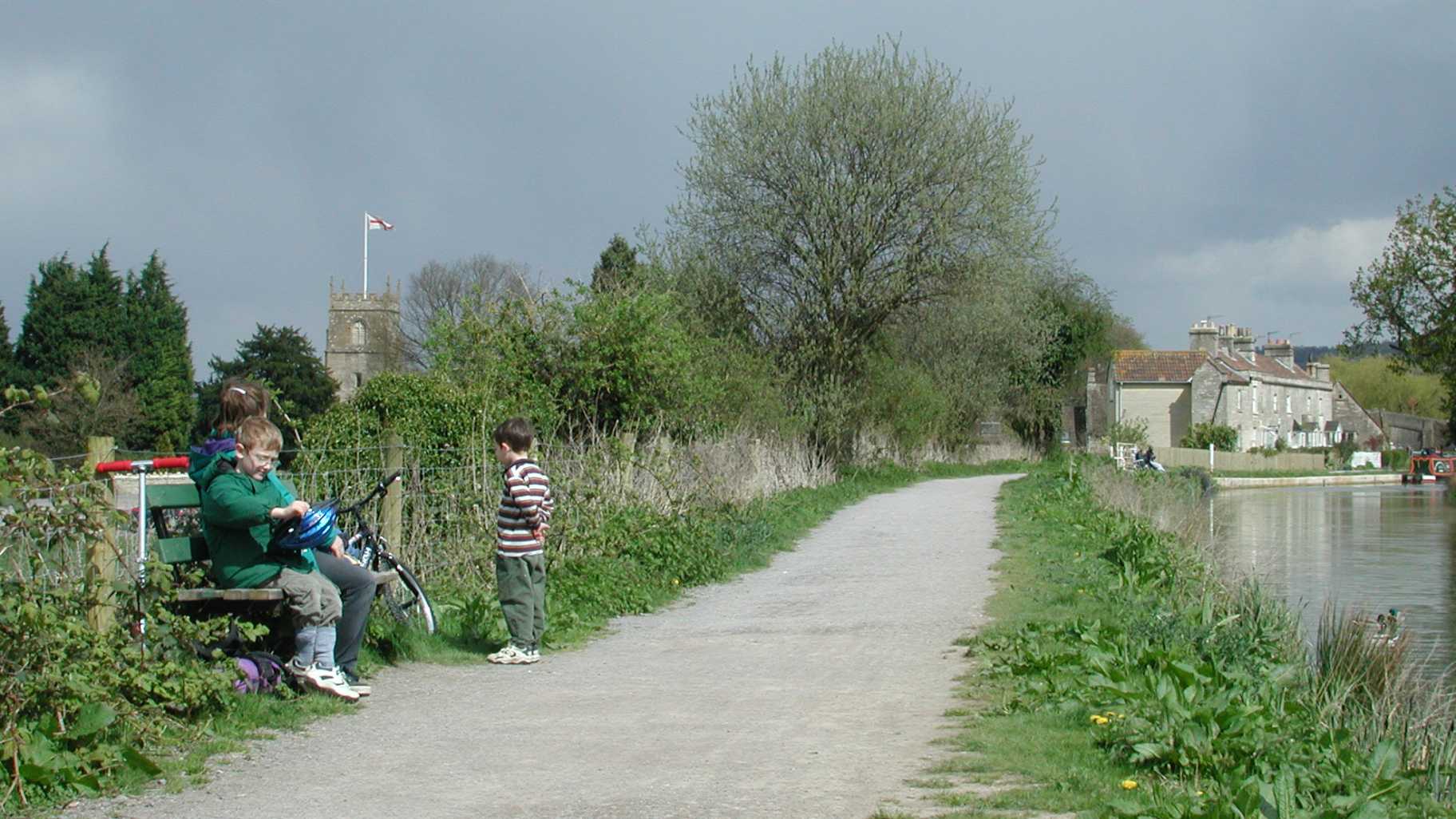
 On the way back from one of our two days in Bath we stopped for a stroll,
scoot and cycle along the towpath. The Cross of St. George, England's
flag, is flying from the steeple of a stone church which was ringing
out changing peals all the time we were there. Quintessentially English !
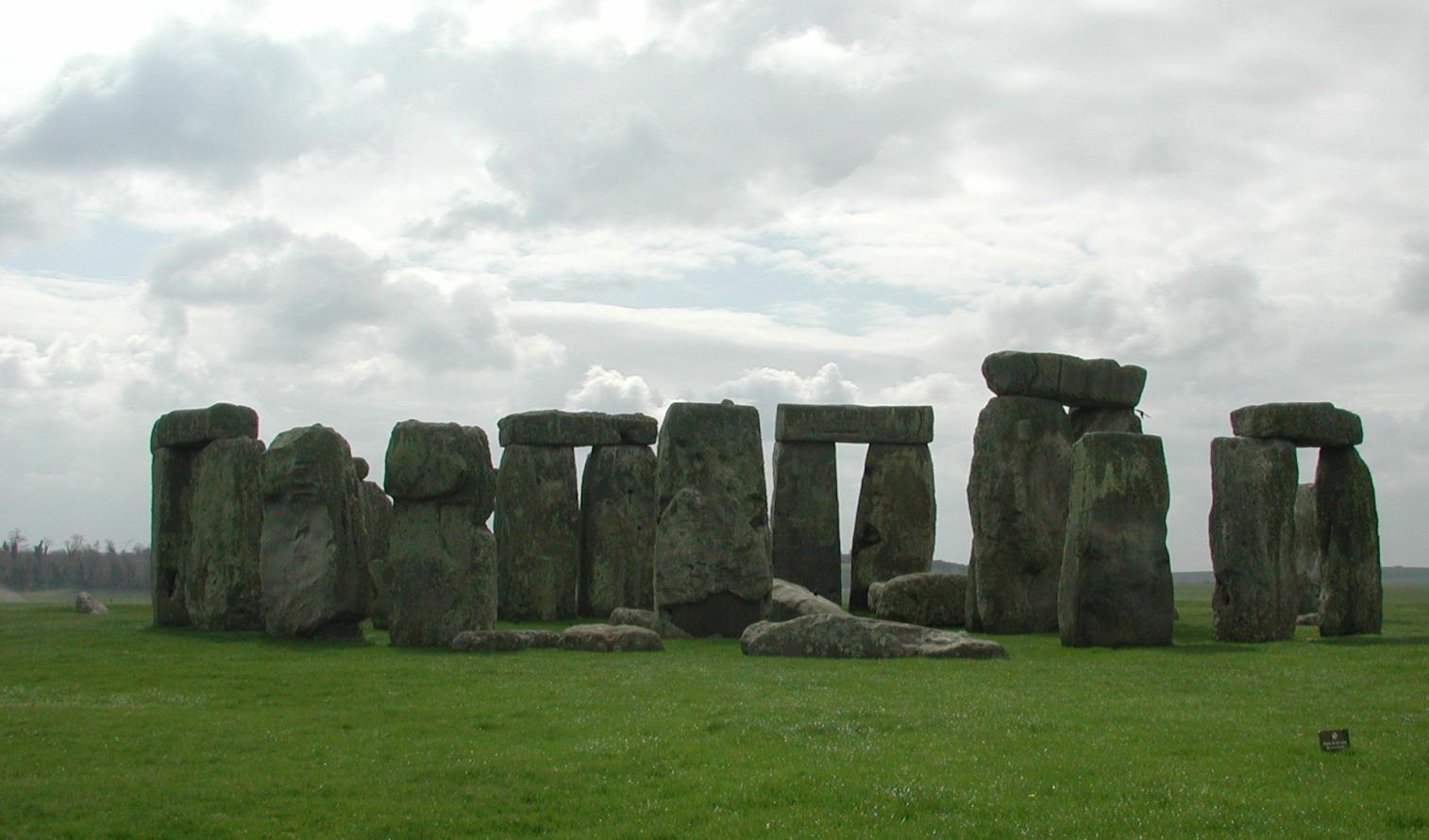
Finally stopping briefly at Stonehenge on our return home, with a cold
wind blowing across the stark Salisbury plain, we had in some sense come
full circle.
On the way back from one of our two days in Bath we stopped for a stroll,
scoot and cycle along the towpath. The Cross of St. George, England's
flag, is flying from the steeple of a stone church which was ringing
out changing peals all the time we were there. Quintessentially English !
Finally stopping briefly at Stonehenge on our return home, with a cold
wind blowing across the stark Salisbury plain, we had in some sense come
full circle.